To the Frog and Back

I know a frog with magical powers. He gets me to walk my dog 16 minutes longer than I want to.
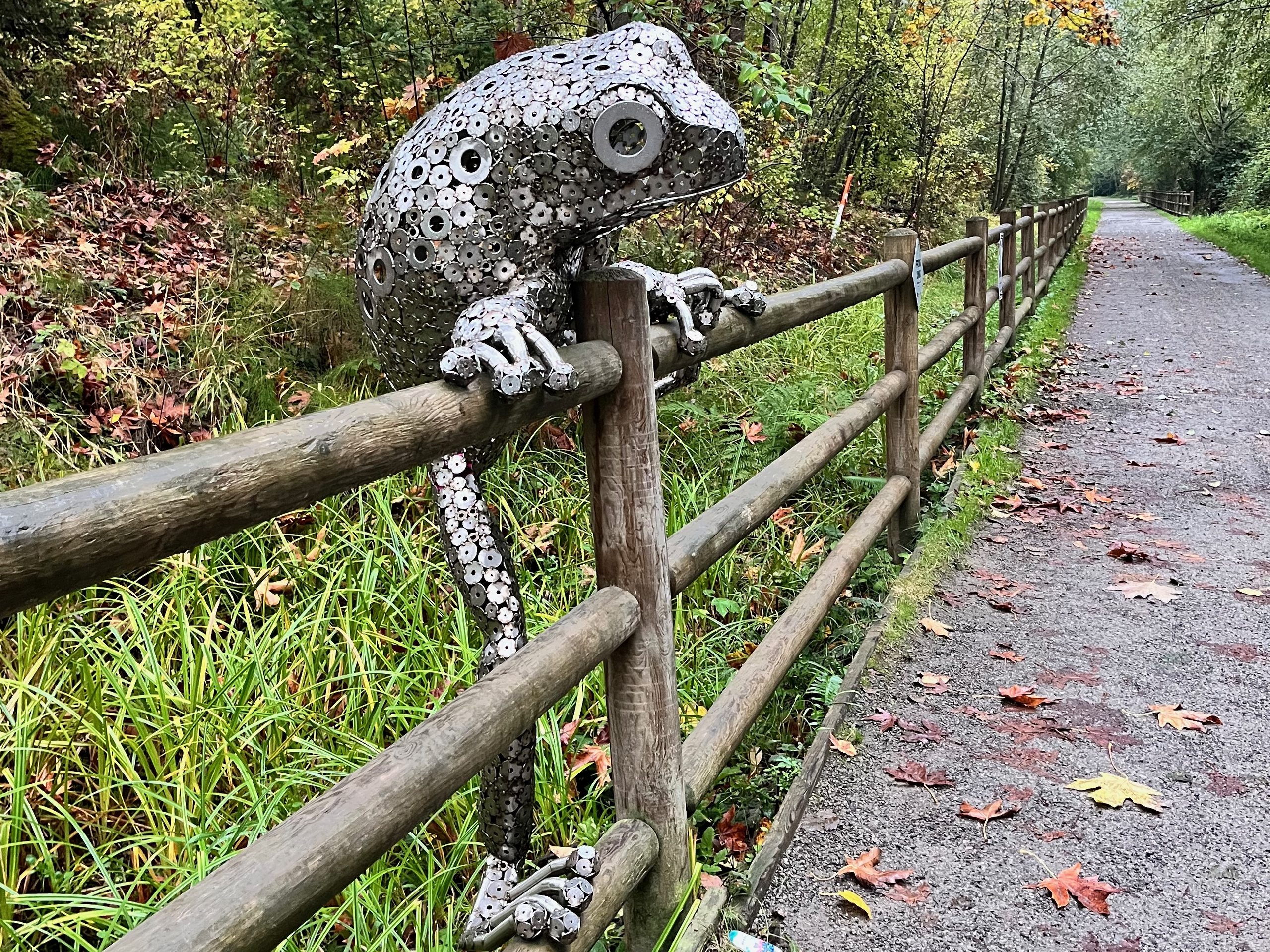
The frog in question is built of stainless steel. He’s a local sculptural landmark, nestled alongside the rails-to-trails bikeway that runs behind my son’s elementary school. His metal skin gleams beneath the leafy trees. The croaks of real frogs float out of the creek beside the path.
We don’t see the magical frog on a regular day. Most mornings, my dog and I walk 20 minutes to deliver my 3rd grade son to school. We weave our way down the streets of a steep hillside dotted with towering pines and suburban homes, down to where the bike trail meets the elementary school. We wave goodbye as my son joins his friends and skips in. We hike 20 minutes back up the tiny mountain and start the workday at home.
Sometimes, we run late. There isn’t time to walk. We must drive.
When the behind-schedule mornings hit
My son is delighted, but the dog is heartbroken. She knows I’m not good for long daytime walks. Once I get into my workday, her walk window is closed until the older kids return from their day. Her spaniel eyebrows furrow with distress as she watches us pull out of the driveway.
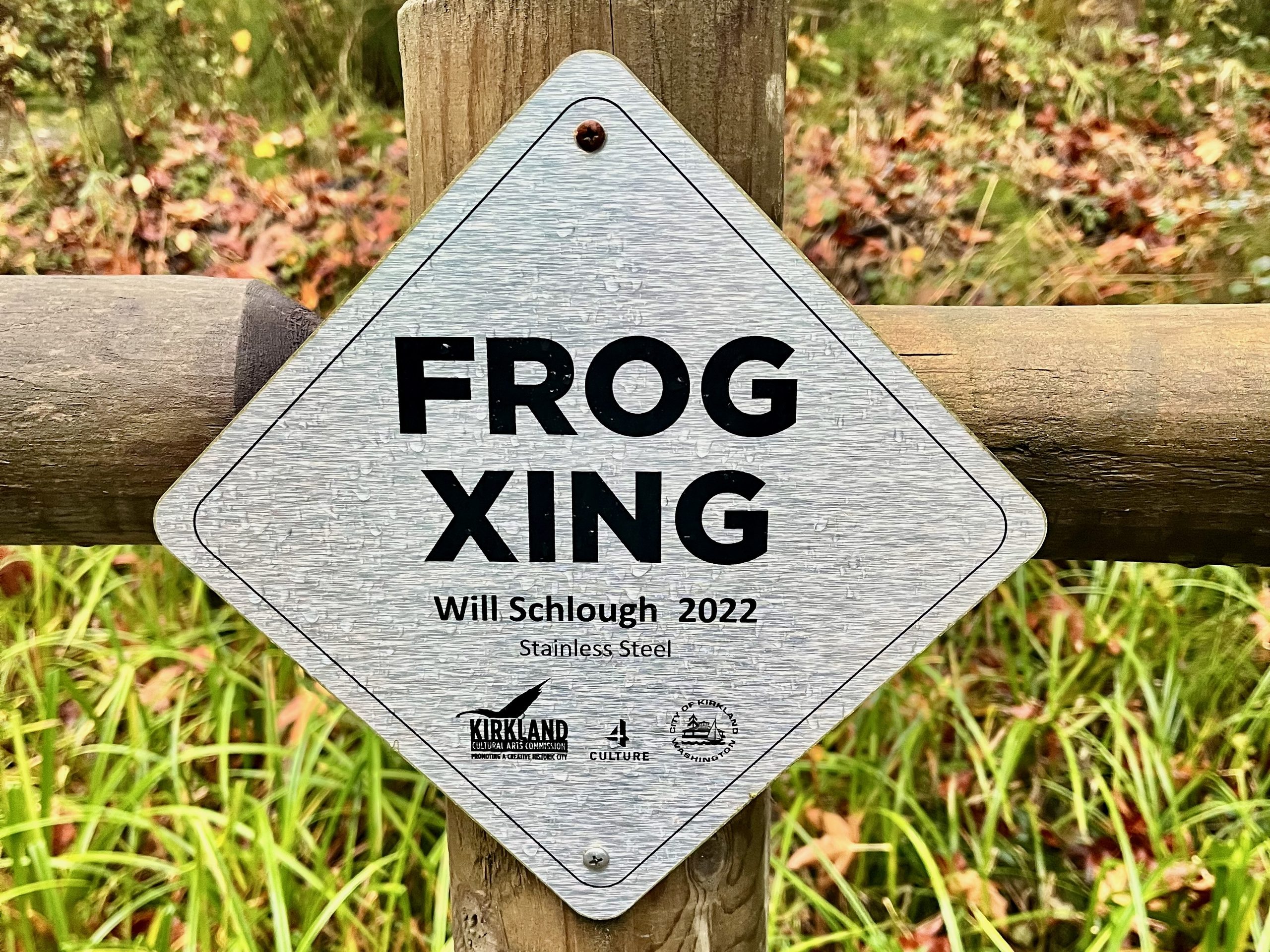
The frog gives us a third option between walk and no-walk on those days when there isn’t enough time.
We take the car, and the dog rides along. We park by the school entrance, and after saying goodbye to the boy, the dog and I will walk eight minutes down the bike trail to our friend the frog. We pause, then walk eight minutes back to our parked car.
To be clear, I don’t want to do this 16-minute walk. On that typical morning when things are running late, there’s even more urgency to jump into the day’s work. The dog’s happiness and well-being feels lower on the priority list with every evaporating minute. The to-do list is a blinking red short-term alarm.
But there’s a frog. He’s not that far. We can make the trip.
Every day is a behind-schedule morning
Everyone you know is overloaded at work. Every day is a running-late-to-school frenzy. The flow of knowledge work tends to drive everyone toward a steady state where they have 20% more work than they can handle, according to Georgetown professor Cal Newport. That’s because knowledge workers only have an incentive to say no to projects after they become materially stressed—around the 120% capacity mark. You, and everyone you work with, probably have 20% too much.
I see this in my work as a freelance financial writer. In the decade+ since I began this work, client projects have moved slower and slower and slower. Why? Because everyone is too busy to get time with the necessary collaborators for each stage of a project. Projects that should take two to three weeks stretch out two to three months instead.
It’s true of content audiences, too. Their time and attention are already over capacity. They may want to dive deep into your new research study or playbook, but when? You might get them for a few seconds or a minute. Or maybe a little more, if you can give them a frog—a satisfying landmark with a tolerable investment.
Giving the audience a frog
When we are reading for information, the frog is a clue or a piece of the answer we are looking for. He’s the graphic or visual driving the point home. When we are reading for fun, the frog is a detail or turning point in the story that really hooks our interest. He’s a little payoff, something that informs or delights, rewarding readers.
The frog is a worthy landmark. He’s kinda fun, and he’s not that far. It’s worth the trip.
Looking for a freelance financial writer?
Overloaded with projects? Please reach out if you or your colleagues could use an experienced freelance financial writer to help get content projects done.